

Why Nylon Flat Belts Are the Go-To Choice for Modern Machinery!
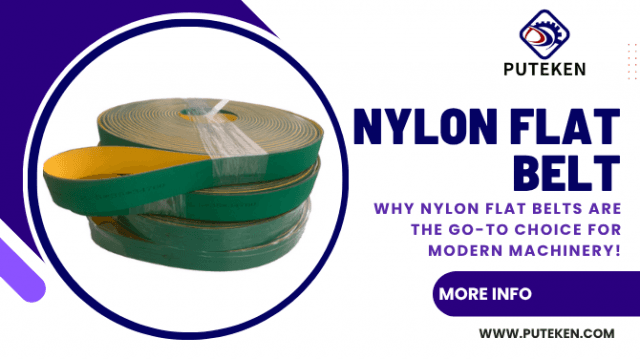
In today's fast-paced industrial world, machinery must perform with relentless accuracy, durability, and efficiency. Whether it's packaging, printing, textiles, or automated assembly, every moving part plays a crucial role in maintaining productivity. Amid this complex mechanical dance, one unsung hero has been making waves with its consistent performance — the Nylon Flat Belt.
Gone are the days when leather or rubber belts dominated the scene. As industries evolved, the need for a more adaptable, wear-resistant, and lightweight power transmission solution became apparent. That's when nylon flat belts began to shine. Known for their exceptional flexibility, impressive tensile strength, and low-noise operation, these belts are now at the heart of some of the most demanding machines in modern manufacturing.
But what makes them such a standout choice?
First, their design. Flat belts inherently allow more surface contact with pulleys, improving energy transmission and reducing slippage. Now, combine that with nylon — a material praised for its durability, resilience, and low stretch — and you get a product that meets the performance and cost-efficiency standards of 21st-century production.
At the forefront of this innovation is Shanghai Puteken Transmission System Co., Ltd., a globally recognized leader in power transmission systems. Their engineering expertise and customization capabilities have made them a go-to supplier for companies looking to upgrade their belt systems with Nylon Flat Belts built to last.
What Is a Nylon Flat Belt?
A Nylon Flat Belt is a high-strength, synthetic-based transmission belt characterized by its flat profile and layered construction. Unlike traditional V-belts or toothed belts, flat belts use surface area friction and tension to transmit power efficiently. The core material — nylon — provides exceptional resilience, durability, and load-bearing capability, making it ideal for both light-duty and high-speed applications.
These belts typically consist of:
- Nylon core layers for strength and flexibility
- Friction-enhancing outer coatings (such as rubber or fabric)
- Surface finishes tailored for grip, anti-static properties, or chemical resistance
This combination results in a belt that offers low elongation, quiet operation, and excellent mechanical efficiency.
Evolution of Belt Systems in Industry
From Leather to Nylon
Historically, belts were made from natural materials like leather, which provided adequate tension but wore out quickly. As machinery grew more sophisticated, these materials failed to meet the increasing demand for durability and consistency.
The shift to synthetic materials marked a turning point. Nylon, in particular, offered a balance of strength, flexibility, and resistance to environmental conditions, making it a natural successor to outdated materials.
Characteristics That Make Nylon Flat Belts Unique
- Exceptional Tensile Strength
Nylon fibers can handle high loads without snapping, which means these belts can work in high-tension applications without constant adjustment. - Low Noise Operation
One major advantage nylon belts have over chains and gears is silent performance. This makes them perfect for industries where noise reduction is essential, such as packaging or office equipment manufacturing. - High Coefficient of Friction
Nylon belts maintain a strong grip on pulleys, reducing slippage and enhancing power transmission efficiency. - Lightweight and Durable
Nylon is significantly lighter than rubber or metal alternatives, which not only reduces energy consumption but also lessens wear on other machine components.
Advantages in Modern Industrial Settings
- High-speed compatibility without heat buildup
- Energy-efficient operation due to minimal slippage
- Long lifespan, reducing replacement frequency
- Ease of alignment and setup, saving downtime
- Minimal maintenance, enhancing productivity
Industrial Applications of Nylon Flat Belts
- Textile and Spinning Machinery
In the textile sector, precision and tension stability are critical. Nylon belts provide non-slip performance and reliable tension control, ensuring consistent fabric quality. - Printing and Paper Processing
These belts help maintain registration accuracy in printing presses and transport delicate paper materials without damage or slippage. - Packaging Automation
Nylon belts support high-cycle applications with smooth operation, especially on conveyors, labelers, and sorters. - Logistics and Warehousing
They are used in sortation systems, parcel handling, and warehouse automation due to their speed and minimal noise. - Light-Duty Assembly Lines
In electronics, food packaging, or light component assembly, nylon flat belts provide the flexibility and accuracy required for delicate tasks.
Mechanical Benefits
- Minimal Elongation
Nylon's molecular structure resists stretching under load, which means belts retain their shape and tension even after prolonged use. - Vibration Absorption
Compared to metal chains or gears, nylon belts absorb machine vibrations, extending the life of both the belt and the equipment. - Reduced Slip and Backlash
In precision environments, backlash can lead to production defects. Nylon flat belts eliminate this problem with smooth, predictable motion.
Customization Options for Specific Needs
With Shanghai Puteken Transmission System Co., Ltd., customization isn't just an option—it's a standard.
Key Custom Options Include:
- Belt widths ranging from narrow strips to wide conveyors
- Thickness variations for load handling or tension control
- Special surface coatings (anti-static, food-grade, oil-resistant)
- Color options and logo branding for OEMs
Whether you're running a textile mill or a high-speed packaging line, these belts can be tailored to fit your exact machine and application needs.
Environmental and Operational Resilience
- Resistant to Moisture and Humidity
Nylon is less prone to swelling or degrading in humid conditions, unlike traditional belts that stretch or warp. - Performs in Extreme Conditions
These belts can operate in environments ranging from -20°C to +100°C without losing structural integrity. - Dust and Chemical Resistance
Their outer layers can be designed to resist dust accumulation and chemical exposure, making them ideal for rough environments like foundries or printing shops.
Maintenance and Lifespan
Properly installed Nylon Flat Belts are incredibly low maintenance. Here's how to keep them running efficiently:
- Tension Checks: Conduct monthly inspections
- Pulley Alignment: Misalignment leads to uneven wear
- Clean Environment: Dust and oil can affect grip
- Replacement Cycle: Most belts last 3–5 years, depending on load and environment
Innovations from Shanghai Puteken Transmission System Co., Ltd.
- Extensive product catalog
- ISO-compliant production processes
- Expert engineers for technical consultation
- Rapid customization and delivery
Shanghai Puteken delivers cutting-edge Nylon Flat Belts for global markets, backed by years of research, testing, and proven industrial success.
Cost-Effectiveness and ROI
Although the upfront cost of nylon flat belts may be slightly higher than basic rubber belts, they offer:
- Lower replacement frequency
- Less downtime
- Reduced maintenance labor
- Improved energy efficiency
All of these contribute to a lower total cost of ownership (TCO) and a strong return on investment.
In a world where machinery must do more with less—less energy, less noise, less downtime—Nylon Flat Belts have become the go-to solution for smart manufacturers. Their durability, flexibility, and precision put them in a league of their own.
With trusted suppliers like Shanghai Puteken Transmission System Co., Ltd., businesses gain access to world-class products backed by expert support and innovation. If you're looking to upgrade your transmission systems, now's the time to invest in the belt that's built for the future.
FAQs
1. Are Nylon Flat Belts suitable for high-speed operations?
Yes. Their low-stretch properties and high strength make them ideal for high-speed machines with minimal slippage.
2. What industries benefit most from these belts?
Textile, printing, packaging, light assembly, and logistics all gain from the durability and low-maintenance profile of nylon belts.
3. Can they be customized for non-standard applications?
Absolutely. Shanghai Puteken offers custom sizes, materials, surface coatings, and branding options.
4. How long do Nylon Flat Belts typically last?
With proper use and maintenance, they can last between 3 to 5 years, depending on the environment and load.
5. Does Shanghai Puteken offer bulk or OEM supply?
Yes. They specialize in both small-batch custom orders and large-scale OEM supply for global clients.